


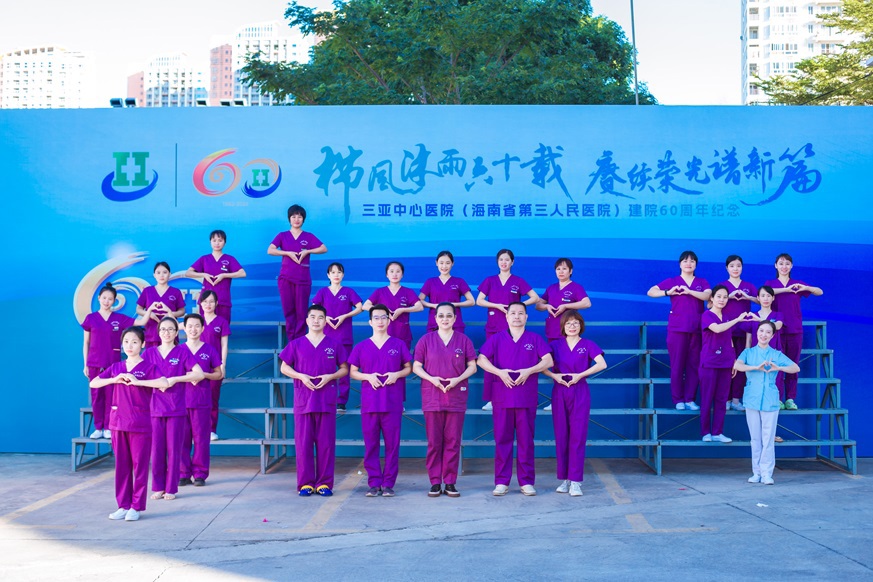
The Neonatology Department of Sanya Central Hospital (The Third People's Hospital of Hainan Province, formerly Hainan Nongken Sanya Hospital) is the largest critical care and premature infant treatment base in the southern region of Hainan Province. It serves as the Hainan Provincial Critical Neonatal Care Center, a Hainan Provincial Level I Clinical Key Specialty, a National Pediatric Clinical Training Base, and a Clinical Drug GCP Base. The department consistently undertakes the transfer and treatment of critically ill newborns from surrounding areas and has established a neonatal emergency network with hospitals in the southern Hainan region.
The department has a team of 50 medical staff, including 13 doctors, 2 chief physicians, 3 associate chief physicians, and 4 attending physicians. The department operates 50 beds, including a 20-bed Neonatal Intensive Care Unit (NICU), general neonatal wards, a premature infant ward, critical isolation wards, general isolation wards, a hearing screening room, a high-risk infant examination area, and a neonatal outpatient clinic. With well-structured talent echelons and strong clinical capabilities, the department has established a comprehensive neonatal diagnosis and treatment system in the southern Hainan region and serves as the headquarters of the Chair of the Neonatology Professional Committee of the Sanya Medical Association.
The Neonatology Department has achieved significant accomplishments in the treatment of critically ill newborns and premature infants, including Advanced ventilator modes: High-frequency oscillatory ventilation (HFOV), and sequential therapy combining invasive and non-invasive mechanical ventilation. Hypothermia therapy for severe neonatal asphyxia. Peritoneal dialysis technology. Real-time and dynamic monitoring of neonatal brain injury using cerebral oxygen and brain function monitoring. Non-invasive hemodynamic monitoring for continuous and reliable real-time assessment of critically ill infants. Transcutaneous carbon dioxide monitoring, and the application of LISA and MIST techniques for pulmonary surfactant administration to prevent respiratory distress syndrome in premature infants. Use of nitric oxide and sildenafil for pulmonary hypertension, ibuprofen for patent ductus arteriosus (PDA) in premature infants, and exchange transfusion for severe neonatal hyperbilirubinemia. Umbilical artery and vein catheterization, and peripherally inserted central catheters (PICC) to establish long-term venous access. The department has extensive experience and excellent outcomes in treating common and complex neonatal conditions, including neonatal respiratory distress syndrome (NRDS), disseminated intravascular coagulation (DIC), severe pneumonia, severe neonatal asphyxia, persistent pulmonary hypertension, shock, multiple organ dysfunction, hyperbilirubinemic encephalopathy, sepsis, purulent meningitis, neonatal pulmonary hemorrhage, capillary leak syndrome, acute renal failure, and extremely premature infants. The department is supported by a highly skilled and dedicated nursing team, proficient in: Critical care for acutely ill newborns. PICC placement and maintenance. Care for umbilical artery and vein catheters. "Nest" care and kangaroo care for premature infants. Respiratory and nutritional support management for premature infants. Additionally, the department excels in: Post-discharge management of high-risk infants. Neonatal transport management and care. One-day jaundice ward care. Neonatal pain management. Neonatal psychological care. Infant neurological assessments. These capabilities ensure comprehensive and high-quality care for all neonatal patients.
The Neonatology Department actively supports the development of neonatal departments in surrounding hospitals. Department members have published over 50 papers in national journals, undertaken more than 10 research projects, and received the Sanya City Science and Technology Progress Second Prize.
Department Equipment: The neonatal ward is equipped with state-of-the-art facilities, including over 20 advanced imported neonatal ventilators (18 invasive ventilators, including 3100A high-frequency, Draeger high-frequency, conventional frequency, and invasive CPAP), 4 non-invasive CPAP machines, intra-and inter-hospital transport vehicles, continuous renal replacement therapy (CRRT) machines, hypothermia therapy devices, cerebral oxygen and brain function monitors, non-invasive hemodynamic monitors, transport ventilators and incubators for inter-hospital transfers, T-piece resuscitators, nitric oxide (NO) therapy devices, transcutaneous carbon dioxide monitors, multiple combination warmers, phototherapy units, and blue light lamps. Multiparameter monitors, portable ultrasound machines, ECG machines, and defibrillators. Blood glucose meters, air-oxygen blenders, infusion pumps, and bedside blood gas analyzers. Transcutaneous bilirubinometers, otoacoustic emission devices, auditory brainstem response systems, and GMS systems.
The Neonatology Department aims to reduce neonatal mortality while minimizing disability rates and improving the survival and quality of life of infants. It implements longitudinal management for high-risk infants and has established neonatal and high-risk infant outpatient clinics with follow-up systems for early intervention, striving to provide comprehensive care for every child.
Service Philosophy: "Everything for the well-being of our babies!"
Doctor Station Tel.: 0898-38225854
Nursing Station Tel.: 0898-38225855, 38225856
Neonatal Transport Tel.: 15108951120


